Container Shipping vs Break Bulk: Which Is Better for Excavators?
When it comes to excavator shipping, choosing the right transport method can significantly affect cost, safety, and delivery time. Two of the most common international shipping options are container shipping and break bulk shipping. Each method has its own advantages and limitations depending on the size of the excavator, shipping route, and budget.
In this article, we will compare container shipping and break bulk shipping to help you determine which option is better for transporting excavators.
What Is Container Shipping?
Container shipping means transporting cargo inside standard shipping containers, typically 20-foot or 40-foot containers. Smaller excavators can sometimes fit inside these containers after partial disassembly.
For example, compact excavators and mini excavators can often be shipped by removing parts such as:
The boom
The arm
The bucket
The cab or canopy (sometimes)
These components are then secured inside the container to ensure safe transportation.
Advantages of Container Shipping
1. Better Protection
Containers provide strong protection against weather, seawater, and external damage. This is especially useful when shipping excavator parts or smaller machines.
2. Lower Risk of Theft
Because containers are sealed, the risk of cargo theft or tampering is significantly reduced.
3. Suitable for Smaller Excavators
Mini excavators or compact machines are often ideal candidates for container shipping.
Limitations of Container Shipping
However, container shipping is not always practical for large construction equipment.
Large excavators cannot fit inside standard containers.
Disassembly can increase labor and preparation costs.
Loading and unloading may require additional equipment.
What Is Break Bulk Shipping?
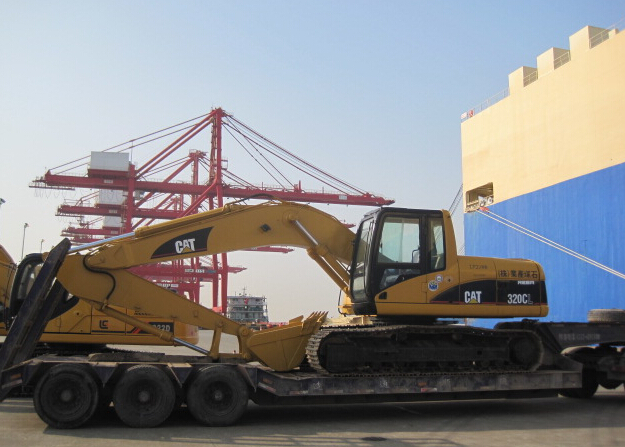
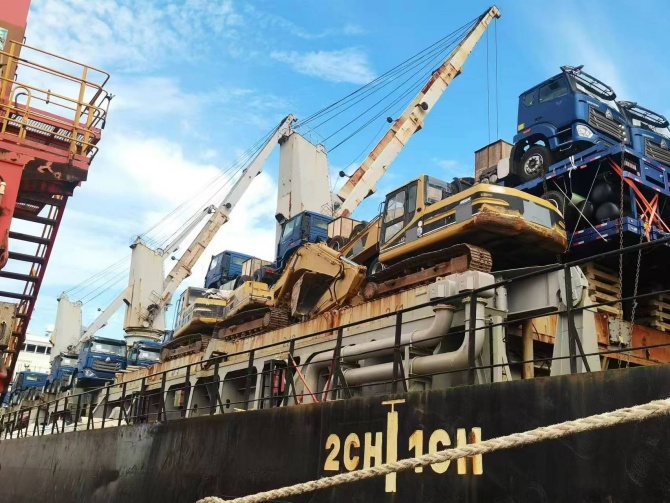
Break bulk shipping refers to transporting cargo that cannot fit into containers. In this method, excavators are loaded directly onto the vessel using cranes.
The machines are typically secured on the ship’s deck or in the cargo hold using heavy-duty lashing equipment.
Advantages of Break Bulk Shipping
1. Ideal for Large Excavators
Medium and large excavators usually exceed container dimensions. Break bulk shipping allows them to be transported without major disassembly.
2. Faster Preparation
Since the machine does not need to be dismantled, preparation time is shorter.
3. Flexible Cargo Dimensions
Break bulk vessels can accommodate oversized and heavy equipment easily.
Limitations of Break Bulk Shipping
Despite its advantages, break bulk shipping also has some downsides.
Higher exposure to weather and sea conditions
Potentially higher port handling costs
Less protection compared to sealed containers
Cost Comparison
The cost of excavator shipping depends on several factors:
Machine size and weight
Shipping route and distance
Port handling fees
Disassembly requirements
In general:
Container shipping is often cheaper for mini excavators and parts.
Break bulk shipping is usually more economical for medium and large excavators because it avoids disassembly costs.
Which Shipping Method Is Better?
The best method depends mainly on the excavator size.
Container shipping is better when:
Shipping mini excavators
Shipping excavator parts
Extra cargo protection is required
Break bulk shipping is better when:
Shipping medium or large excavators
The machine cannot fit into containers
You want to avoid disassembly
Final Thoughts
Both container shipping and break bulk shipping play important roles in excavator shipping. Container shipping offers better protection and security, while break bulk shipping is more practical for oversized machines.
Before choosing a method, it is important to evaluate the excavator’s dimensions, shipping costs, and preparation requirements. Selecting the right option can help ensure safe and cost-effective transportation.