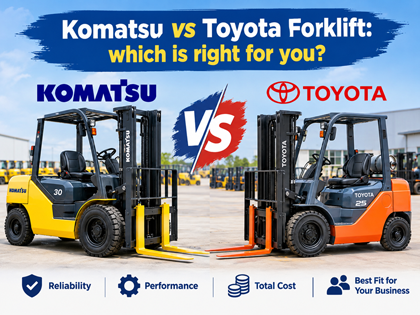

Heli vs Toyota Forklift: Which Is Right for You?
Choosing between Heli and Toyota is an important decision when buying a forklift for your warehouse, factory, construction site, or material handling business. Both brands offer a wide range of forklifts, but they have different advantages in terms of purchase price, operating costs, durability, maintenance, and long-term value.
In this guide, we compare Heli vs Toyota Forklift to help you choose the right machine for your working conditions and budget.
1. Brand Background: Heli vs Toyota
Heli Forklift
Heli is one of China’s leading forklift manufacturers and has become a well-known brand in the global material handling industry. Its product range includes diesel forklifts, electric forklifts, LPG forklifts, and heavy-duty forklifts.
One of Heli’s biggest advantages is its competitive pricing. Buyers can often purchase a relatively new Heli forklift at a lower price than a comparable Toyota model. This makes Heli an attractive choice for businesses looking to expand their equipment fleet without making a large investment.
Toyota Forklift
Toyota is a globally recognized Japanese forklift manufacturer with a long history of producing reliable material handling equipment. Toyota forklifts are widely used in warehouses, distribution centers, factories, ports, and industrial facilities.
Toyota has built a strong reputation for durability, operator comfort, and consistent performance. Its extensive product range and established dealer network also make it a popular choice in many international markets.
2. Purchase Price: Which Forklift Is More Affordable?
Price is one of the biggest differences between Heli and Toyota forklifts.
Heli generally offers a lower purchase price, especially when comparing forklifts with similar lifting capacities and specifications. For businesses with limited budgets or companies purchasing multiple machines, Heli can provide an economical solution.
Toyota forklifts usually cost more because of their established brand reputation, engineering, and market demand. Used Toyota forklifts can also retain relatively strong resale value, depending on their age and condition.
For buyers who prioritize a lower initial investment, Heli is often the better option. However, buyers should compare the total ownership cost rather than looking only at the purchase price.
3. Durability and Performance
Both Heli and Toyota manufacture forklifts designed for demanding working environments, but actual durability depends on the specific model, maintenance history, and operating conditions.
Heli Forklift Performance
Heli forklifts are designed for practical industrial applications, including loading, unloading, warehouse operations, construction material handling, and outdoor transportation.
Many Heli diesel forklift models offer strong lifting performance and practical configurations. They can be a good choice for businesses that need dependable equipment at a competitive price.
Toyota Forklift Performance
Toyota forklifts are known for consistent performance and reliable operation. Many models are designed for frequent daily use, making them suitable for warehouses and industrial operations with demanding working schedules.
Toyota also offers a broad selection of forklift models for different applications, from small warehouse forklifts to larger diesel-powered machines.
If long-term operating reliability is your main priority, Toyota deserves serious consideration. However, a well-maintained Heli forklift can also deliver excellent service.
4. Maintenance and Spare Parts Availability
Maintenance is another important factor when comparing Heli vs Toyota Forklift.
Heli forklifts benefit from China’s large forklift manufacturing and parts supply industry. Many common replacement parts are competitively priced, which can help reduce maintenance expenses.
Toyota has an established international parts and service network. In markets with authorized Toyota dealers, buyers can often access professional technical support and genuine replacement parts.
However, parts availability varies significantly by country and model. In some African markets, for example, the availability of local mechanics and affordable replacement parts may be more important than the manufacturer’s global reputation.
Before purchasing either brand, check the local availability of filters, hydraulic components, transmission parts, tires, and engine parts.
5. Resale Value: Which Brand Holds Its Value Better?
Toyota generally has an advantage in the used forklift market because of its strong international reputation and established demand.
Used Toyota forklifts are familiar to many buyers, and popular models can be easier to resell when they have a good maintenance history and reasonable working hours.
Heli forklifts may have a lower resale price in some markets, particularly where Japanese forklift brands are more popular. However, their lower initial purchase price can help compensate for this difference.
For equipment traders and businesses planning to replace their forklifts after several years, resale value should be included in the purchasing calculation.
6. Which Forklift Is Better for African Buyers?
For African buyers, choosing between Heli and Toyota requires considering more than brand reputation.
In many African countries, Toyota forklifts are popular because of their reputation, familiarity among local mechanics, and demand in the used equipment market.
However, Heli is becoming an attractive alternative for buyers looking for newer equipment at a competitive price.
Here are some practical recommendations:
Choose Heli if your budget is limited and you want a newer forklift with competitive purchasing costs.
Choose Toyota if you prioritize brand recognition, resale value, and access to established local service networks.
Choose a used Toyota if you want a Japanese forklift and can find a machine with verified condition and reasonable working hours.
Choose a new or lightly used Heli if you want to invest in relatively new equipment without paying a premium for a Japanese brand.
Before importing a forklift from China or Japan, always check the machine’s condition, engine performance, hydraulic system, transmission, and lifting capacity.
7. Heli vs Toyota Forklift: Comparison Table
| Comparison | Heli | Toyota |
|---|---|---|
| Brand origin | China | Japan |
| Purchase price | Generally lower | Generally higher |
| Durability | Good | Very good reputation |
| Performance | Good | Very good |
| Spare parts cost | Often competitive | Model-dependent |
| Global recognition | Growing | Very strong |
| Resale value | Market-dependent | Generally stronger |
| Best advantage | Competitive price | Brand reputation |
Note: These are general brand-level comparisons. Actual performance, maintenance costs, and resale values depend on the specific forklift model, year, condition, and local market.
8. Final Verdict: Heli or Toyota Forklift?
So, which is better in the Heli vs Toyota Forklift comparison?
There is no single answer for every buyer.
Heli is a good choice for businesses that want competitive prices, practical performance, and affordable equipment investment. It is particularly attractive for buyers purchasing new or lightly used forklifts from China.
Toyota is a strong choice for buyers who value established brand recognition, long-term reliability, and resale potential. Its popularity in many international used equipment markets is another advantage.
Our recommendation is simple: don’t choose a forklift based on brand name alone. Compare the actual machine condition, manufacturing year, working hours, maintenance history, spare parts availability, and total purchase cost.
A reliable forklift at a reasonable price is always a better investment than an expensive machine with an uncertain history.
Whether you choose Heli or Toyota, the right forklift should meet your working requirements, fit your budget, and deliver dependable performance for years to come.
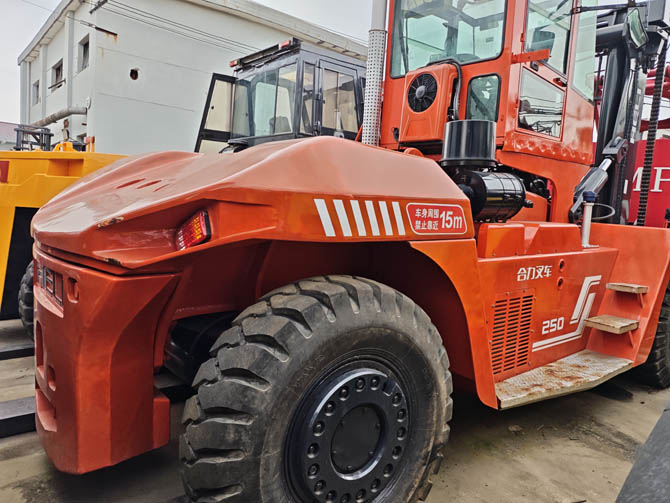
- Make:
- Model Name:
- Place of Origin:
- Heli
- CPCD250
- China
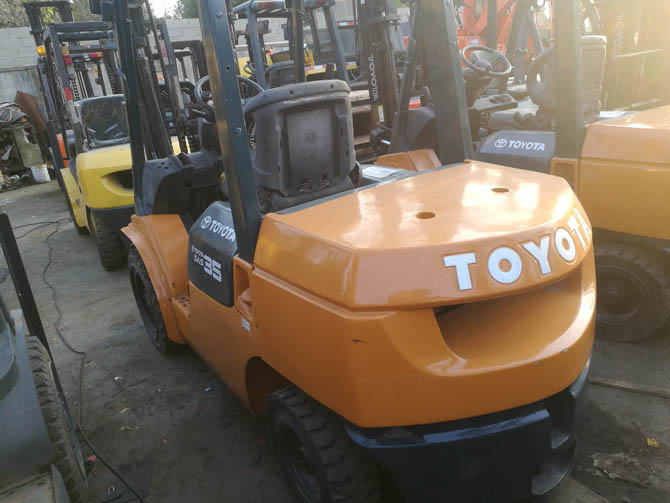
- Make:
- Model Name:
- Place of Origin:
- Toyota
- 72-7FDJ35
- Japan
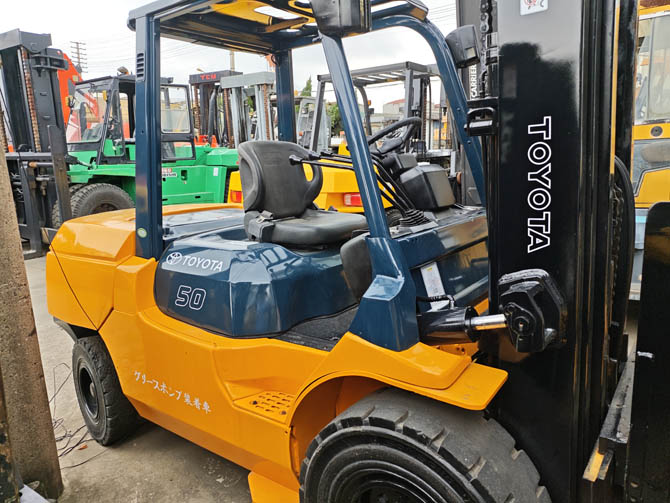
- Make:
- Model Name:
- Place of Origin:
- Toyota
- 7FDA50
- Japan
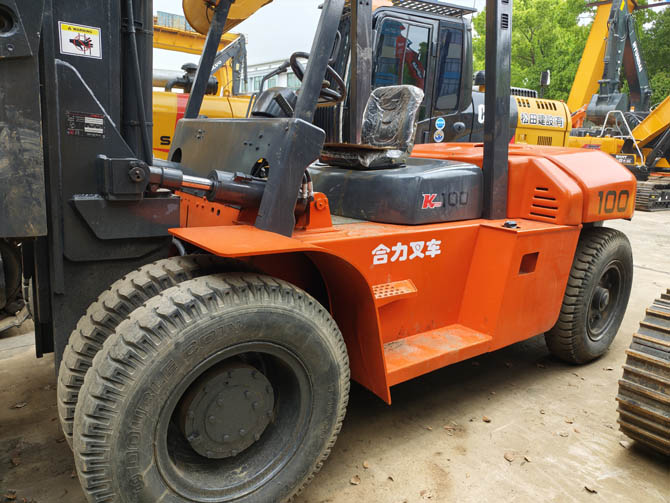
- Make:
- Model Name:
- Place of Origin:
- Heli
- CPCD100
- China