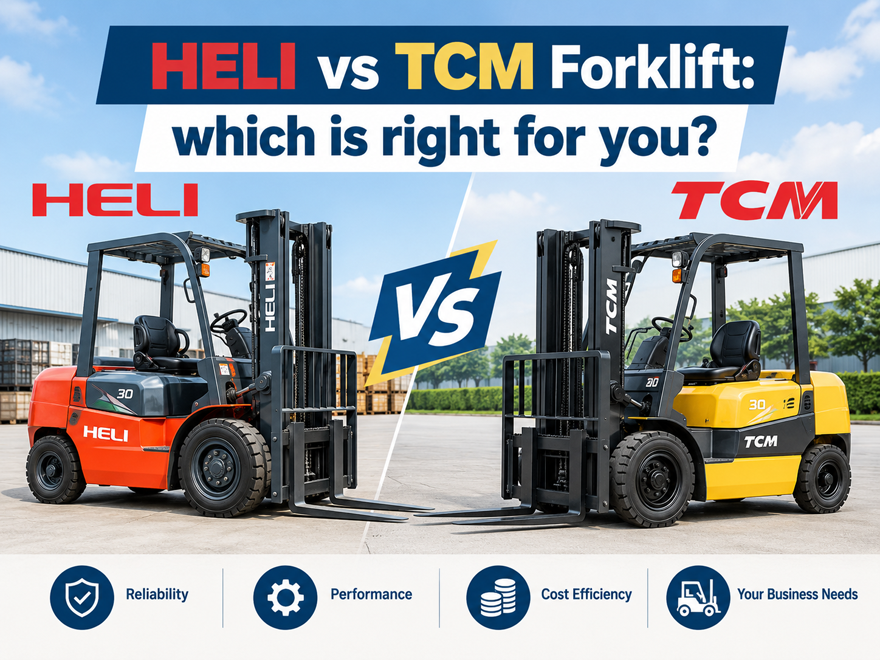
HELI vs TCM Forklift: Which Is Right for You?
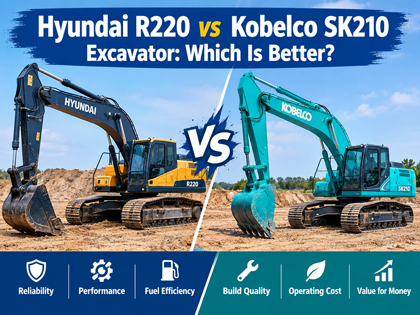
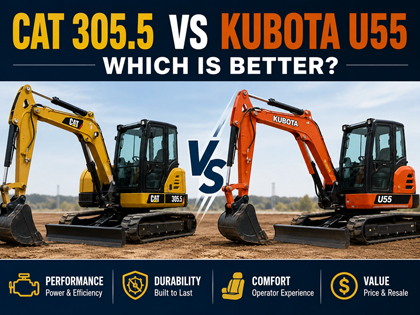
When choosing a forklift for construction, warehousing, logistics, or material handling, the brand can make a significant difference in operating cost, maintenance, and long-term reliability. HELI vs TCM Forklift is a common comparison for buyers looking for a practical and dependable used forklift.
HELI and TCM are both well-known forklift brands in the Asian market, but they have different strengths. The right choice depends on your budget, working conditions, lifting requirements, parts availability, and expected operating hours.
HELI Forklift Overview
HELI is a major Chinese manufacturer of industrial vehicles and forklifts. Its product range includes diesel forklifts, LPG forklifts, electric forklifts, warehouse equipment, and heavy-duty material-handling machines.
One of HELI’s main advantages is its wide availability in China and many overseas markets. New and used HELI forklifts are often available at competitive prices, making the brand attractive to buyers who want to control their initial investment.
HELI forklifts are commonly used in warehouses, factories, ports, construction sites, agricultural operations, and general material handling.
For buyers purchasing used equipment, HELI can also be attractive because many machines are relatively straightforward to maintain, while replacement parts and service resources can be accessible in markets where Chinese equipment is widely used.
TCM Forklift Overview
TCM is a Japanese forklift brand with a long history in the material-handling industry. TCM forklifts are known for their practical design, stable operation, and durability.
Used TCM forklifts are popular in many export markets, particularly among buyers looking for Japanese used machinery. Depending on the model and production year, TCM forklifts may be equipped with reliable diesel, LPG, or electric power systems.
For buyers who prioritize a proven Japanese forklift design, a well-maintained TCM can be an attractive option.
HELI vs TCM Forklift: Main Differences
The differences between HELI and TCM are not simply about brand. The specific model, production year, engine, working hours, maintenance history, and operating environment can have a major impact on actual performance.
| Factor | HELI Forklift | TCM Forklift |
|---|---|---|
| Brand origin | China | Japan |
| Typical market position | Competitive and practical | Japanese used-equipment market |
| Purchase price | Often competitive | Depends heavily on age and condition |
| Parts availability | Good in many markets | Good where Japanese parts are available |
| Maintenance | Generally straightforward | Generally straightforward |
| Used-machine options | Many newer machines available | Many older Japanese used machines available |
| Applications | Warehouses, factories, construction, logistics | Warehouses, factories, logistics, general handling |
These are general characteristics. A specific HELI or TCM forklift should always be evaluated based on its actual condition rather than brand name alone.
Price and Budget
Price is an important factor when comparing HELI and TCM forklifts.
A used HELI forklift may offer a relatively attractive purchase price, especially when buyers are purchasing directly from the Chinese market. This can be useful for businesses that need several forklifts while keeping the total equipment budget under control.
TCM forklifts can also offer good value in the used market. However, prices can vary significantly depending on production year, lifting capacity, engine type, operating hours, country of origin, and maintenance condition.
When comparing prices, buyers should calculate the total cost of ownership, not only the initial purchase price. Shipping, customs duties, spare parts, maintenance, tires, batteries, and future repairs should all be considered.
Lifting Capacity and Working Conditions
Before choosing between HELI and TCM, determine the actual lifting capacity you need.
Common forklift capacities include 2-ton, 2.5-ton, 3-ton, 3.5-ton, 5-ton, and larger heavy-duty models. A forklift used inside a warehouse may have very different requirements from one working outdoors on a construction site.
For example, if you mainly move pallets on smooth warehouse floors, a standard forklift may be sufficient. If the machine will work outdoors with heavy loads and long operating hours, you should pay more attention to tire type, ground clearance, engine condition, cooling system, mast condition, and overall structural strength.
Maintenance and Spare Parts
Maintenance is especially important when buying a used forklift.
For a HELI forklift, parts availability can be convenient in markets where Chinese machinery is common. Buyers should still confirm the availability of filters, hydraulic components, transmission parts, engine components, tires, and other commonly replaced parts before purchasing.
For TCM, parts availability depends more heavily on the local market and the exact model. Older Japanese forklifts can sometimes require more careful parts sourcing.
When buying a used forklift from overseas, ask the seller for the model number, serial number, engine information, production year, operating hours, and maintenance records whenever available.
Used HELI vs Used TCM: What Should You Check?
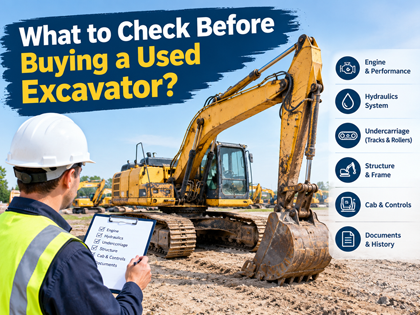
Whether you choose HELI or TCM, inspecting the actual machine is more important than simply choosing a brand.
Before buying, check:
- Engine starting and exhaust condition
- Hydraulic system and lifting performance
- Mast and fork condition
- Transmission and travel operation
- Steering and braking system
- Tires or solid tires
- Hydraulic cylinders and hoses
- Oil and coolant leaks
- Operator cabin and controls
- Hour meter and machine history
- Chassis and counterweight condition
- Overall appearance and signs of previous repairs
A forklift with lower hours is not automatically better. A properly maintained machine with higher hours can sometimes be a better purchase than a low-hour machine with poor maintenance.
Which Forklift Is Better for Your Business?
There is no single answer for every buyer when comparing HELI and TCM.
HELI may be suitable for buyers who want a competitive purchase price, access to Chinese machinery, and a wide selection of relatively newer machines. It can be particularly practical for businesses that need several forklifts for general material handling.
TCM may be suitable for buyers who specifically prefer Japanese used equipment and want a forklift with a long-established Japanese design. The condition and maintenance history of each individual machine remain important factors.
For buyers in Africa, the Middle East, Southeast Asia, and other export markets, local parts availability and technician experience should also be considered before making a final decision.
How to Choose the Right Forklift
When making a HELI vs TCM Forklift comparison, consider these questions:
- What lifting capacity do you need?
- Will the forklift work indoors or outdoors?
- How many hours will it operate each day?
- Is diesel, LPG, or electric power more suitable?
- Are spare parts readily available in your market?
- What is your total budget, including shipping?
- Are you buying new or used?
- Can the seller provide detailed machine photos and videos?
- Can you verify the machine’s production year and serial number?
- Does the machine pass a complete mechanical inspection?
The answers will help you select a forklift based on your actual working conditions rather than choosing only by brand reputation.
Final Thoughts
Both HELI and TCM can be practical choices for material-handling applications. HELI offers strong availability and competitive options from the Chinese market, while TCM provides another option for buyers interested in Japanese used forklifts.
The most important point is to compare the specific forklift, not just the brand. Production year, operating hours, maintenance history, engine, transmission, lifting system, tires, and overall condition can have a greater impact on value than the brand name alone.
If you are buying a used forklift for export, always request detailed photos, videos, machine specifications, and inspection information before making a payment. A reliable supplier should provide clear information and help you understand the machine’s actual condition.

- Make:
- Model Name:
- Place of Origin:
- Heli
- CPCD100
- China

- Make:
- Model Name:
- Place of Origin:
- TCM
- FD150
- Japan

- Make:
- Model Name:
- Place of Origin:
- TCM
- FD70
- Japan

- Make:
- Model Name:
- Place of Origin:
- TCM
- FD100
- Japan

- Make:
- Model Name:
- Place of Origin:
- TCM
- FD200
- Japan