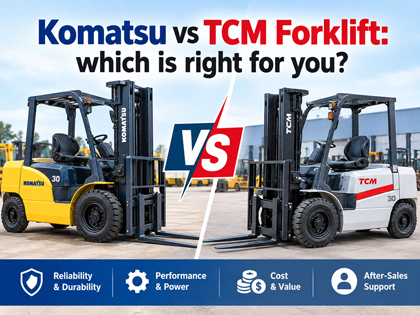
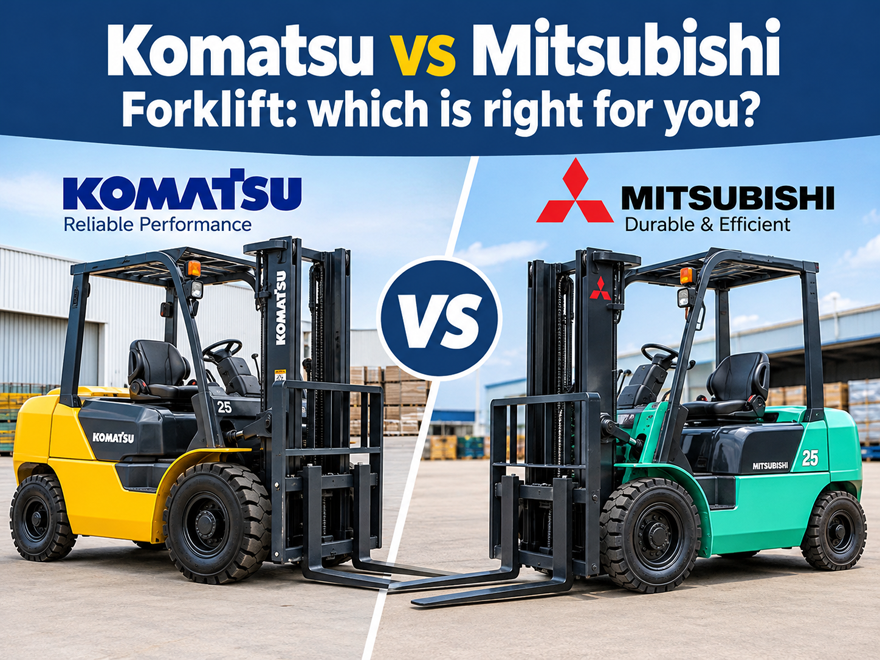
Komatsu vs Mitsubishi Forklift: Which Is Right for You?
Choosing between Komatsu and Mitsubishi forklifts depends on your lifting requirements, working environment, maintenance budget, and the condition of the machine. Both are well-known Japanese machinery brands, and their forklifts can be suitable for warehouses, factories, construction sites, ports, and industrial operations.
If you are planning to buy a used forklift, comparing the two brands can help you find a machine that offers good value and reliable performance.
1. Komatsu vs Mitsubishi Forklift: Brand Overview
Komatsu is widely recognized for its construction machinery, including excavators, wheel loaders, bulldozers, and forklifts. Its industrial equipment is designed for demanding working conditions, making it a practical option for businesses that need dependable material-handling equipment.
Mitsubishi is also an established Japanese machinery brand with a long history in industrial equipment and material handling. Mitsubishi forklifts are available in different capacities and configurations for warehouse operations, manufacturing facilities, logistics centers, and heavy-duty applications.
Both brands have produced a range of forklift models over the years. When buying used equipment, the specific model, production year, maintenance history, and parts availability are often more important than the brand name alone.
2. Performance and Lifting Capacity
Komatsu and Mitsubishi forklifts are available in different lifting capacities, depending on the model. Smaller machines are suitable for moving pallets and handling goods in warehouses, while larger diesel forklifts can handle heavy industrial materials.
Komatsu forklifts may be a good choice for buyers looking for equipment for industrial yards, factories, and demanding material-handling work. Mitsubishi forklifts are also worth considering for logistics operations, manufacturing facilities, and heavy-load applications.
Before choosing a forklift, check its rated lifting capacity, load center, maximum lifting height, and mast configuration. Remember that the actual safe lifting capacity can decrease when the load center increases or when the forks are raised.
For heavy-duty applications, make sure the forklift can handle your materials safely under real working conditions.
3. Fuel Consumption and Operating Costs
Fuel consumption is an important consideration when purchasing a diesel forklift. However, actual fuel costs depend on engine condition, load weight, operating hours, driving habits, and working environment.
Both Komatsu and Mitsubishi offer models with different engine specifications and performance characteristics. Rather than assuming one brand is always more fuel-efficient, compare similar models under similar working conditions.
For used forklifts, inspect the engine, cooling system, transmission, hydraulic system, and signs of oil leakage. A well-maintained machine with reasonable fuel consumption can be more economical than a cheaper forklift that requires frequent repairs.
4. Maintenance and Spare Parts
Maintenance is particularly important when buying a used Japanese forklift for export. Access to spare parts and qualified mechanics can significantly affect operating costs and downtime.
Komatsu and Mitsubishi parts availability varies by model and destination country. Some older models may be easy to maintain in one market but more difficult to service in another.
Before purchasing, confirm that common replacement parts, such as filters, seals, hoses, and engine components, are available locally or can be imported at a reasonable cost.
Ask the seller about the machine’s maintenance history and inspect important components before shipment. A forklift with an original engine and transmission in good working condition can be a valuable investment, provided its condition is properly verified.
5. Buying a Used Komatsu or Mitsubishi Forklift
For buyers comparing used equipment from Japan or China, the machine’s actual condition should be the main priority.
Here are several points to check before making a purchase:
Engine condition: Check starting performance, exhaust smoke, unusual noises, and oil leaks.
Transmission: Test forward and reverse movement and check for abnormal noises or delayed engagement.
Hydraulic system: Inspect the mast, lift cylinders, hoses, and hydraulic functions.
Forks and mast: Look for cracks, excessive wear, deformation, and uneven movement.
Tires and brakes: Check tire wear, braking performance, and steering response.
Operating hours: Compare the hour meter with the machine’s overall condition and available maintenance records.
Rated capacity: Confirm the forklift’s rated lifting capacity and make sure it suits your workload.
If possible, request a cold-start video, a working video, detailed photographs, and a clear inspection report before paying a deposit.
A reliable seller should provide accurate machine information and explain any known defects. Do not choose a forklift based on price alone.
6. Which Forklift Is Better for Your Business?
The right choice depends on your application, budget, and local maintenance conditions.
Choose a Komatsu forklift if you find a model that matches your lifting requirements, offers good mechanical condition, and has suitable spare parts support in your market.
Choose a Mitsubishi forklift if you find a well-maintained machine with the capacity, mast height, and operating characteristics required for your business.
For buyers purchasing used forklifts, neither brand is automatically the better option in every situation. A properly maintained Mitsubishi can be a better investment than a poorly maintained Komatsu, and the reverse is also true.
Compare the total purchase cost, expected maintenance expenses, transportation costs, and availability of parts before making your decision.
7. Final Verdict: Komatsu vs Mitsubishi Forklift
The comparison between Komatsu and Mitsubishi forklifts comes down to the specific machines available and the work they need to perform. Both brands offer options worth considering for industrial and material-handling applications.
If you are buying a used forklift, focus on mechanical condition, lifting capacity, maintenance history, and parts availability rather than relying on brand reputation alone.
The best forklift is one that meets your requirements, stays within your budget, and can work reliably with reasonable maintenance costs. Carefully compare individual machines before deciding which one is right for you.
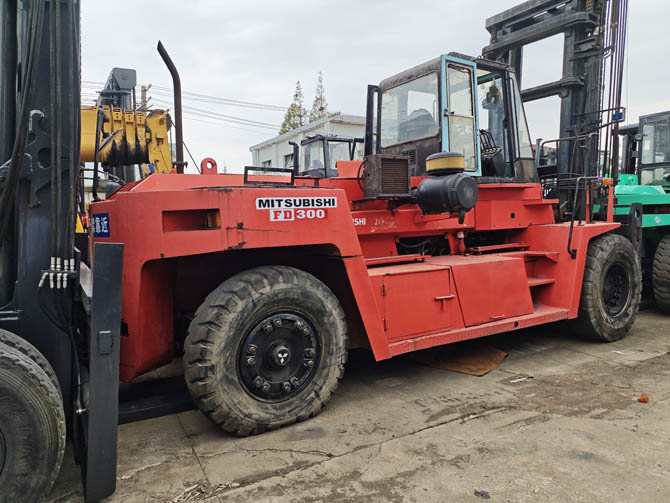
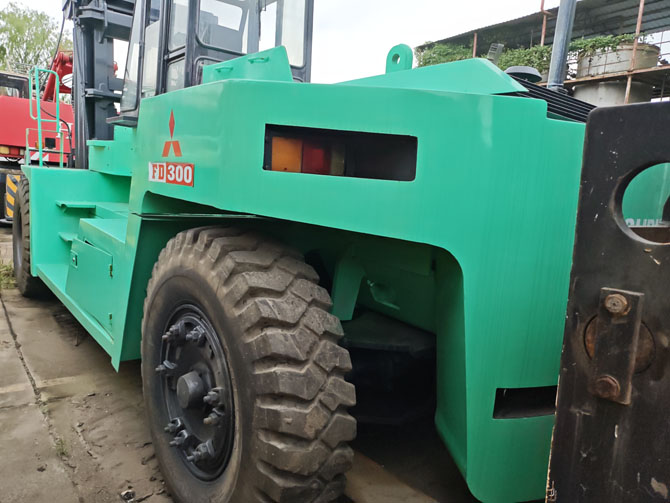
- Make:
- Model Name:
- Place of Origin:
- Mitsubishi
- FD300
- Japan
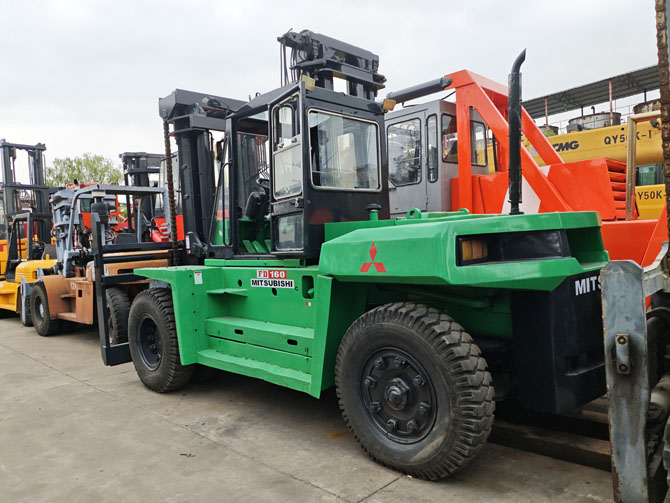
- Make:
- Model Name:
- Place of Origin:
- Mitsubishi
- FD300
- Japan
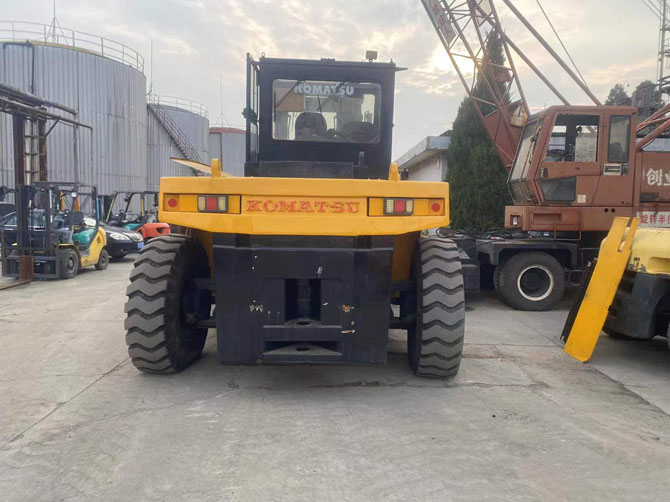
- Make:
- Model Name:
- Place of Origin:
- Mitsubishi
- FD160
- Japan
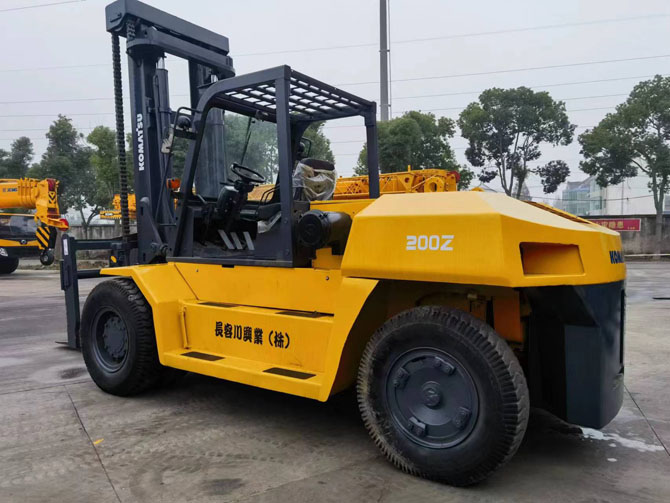
- Make:
- Model Name:
- Place of Origin:
- Komatsu
- FD25T-10
- Japan
- Make:
- Model Name:
- Place of Origin:
- Komatsu
- FD200E-8
- Japan
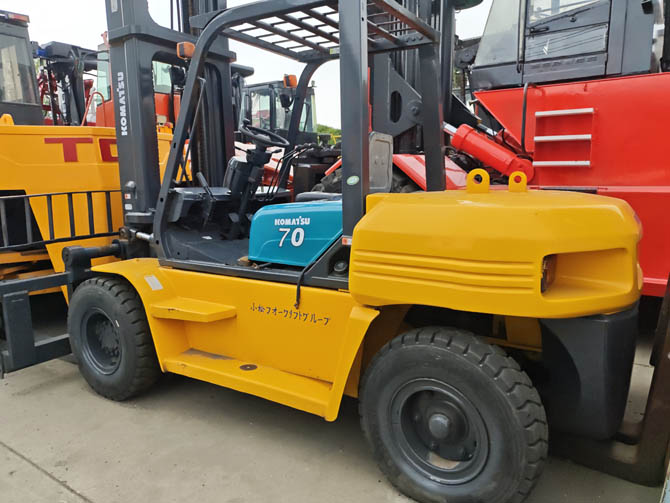
- Make:
- Model Name:
- Place of Origin:
- Komatsu
- FD70-7
- Japan