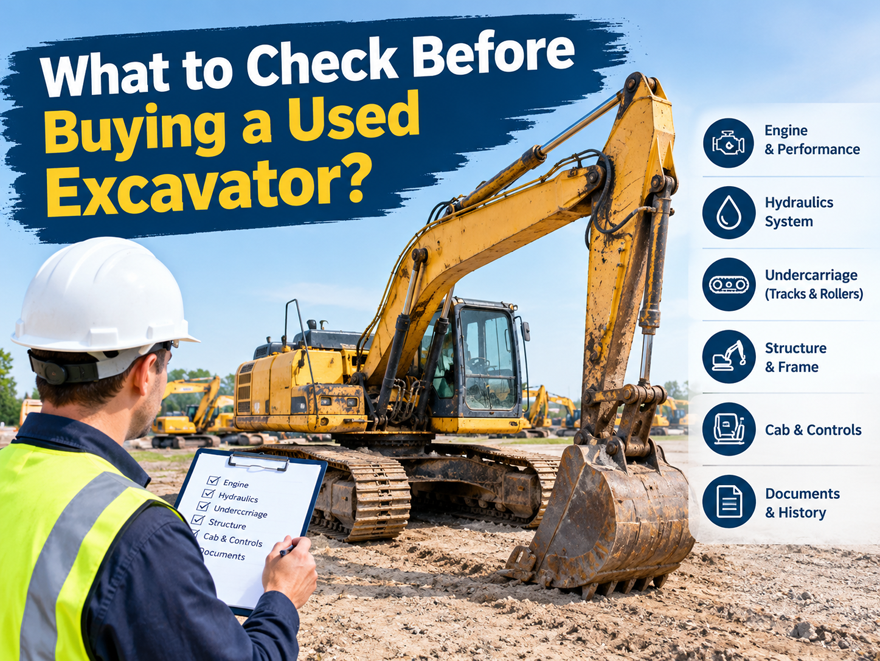
What to Check Before Buying a Used Excavator?
Buying a used excavator can be a smart way to reduce equipment costs, especially when a well-maintained machine is available at a reasonable price. However, buying used equipment also comes with risks if you do not inspect the machine carefully.
A proper used excavator inspection should cover the engine, hydraulic system, undercarriage, working equipment, electrical system, operating hours, and overall condition. If you are buying from overseas, you should also verify the seller and request detailed photos and operating videos before making payment.
Here are the most important things to check before buying a used excavator.
1. Check the Excavator Model and Year
First, confirm the exact excavator model, production year, serial number, and country of origin.
Different versions of the same model can have different engines, hydraulic systems, specifications, and equipment. The serial number should also match the machine’s identification plate and available documents.
The production year is important when comparing prices. A newer excavator with fewer operating hours will normally have a different market value from an older machine with extensive use.
2. Inspect the Engine
The engine is one of the most important parts of any excavator inspection.
If possible, start the machine when the engine is cold. Pay attention to how easily it starts and whether there is unusual smoke, vibration, or noise.
Check for:
- Excessive black, blue, or white smoke
- Engine oil leaks
- Coolant leaks
- Unusual engine noise
- Unstable idling
- Signs of overheating
- Damaged hoses or belts
After the engine reaches normal operating temperature, operate the excavator under load and check whether the engine continues to perform smoothly.
3. Check the Hydraulic System
The hydraulic system controls the boom, arm, bucket, swing, and many other important functions.
During a used excavator inspection, carefully examine the hydraulic pump, hoses, cylinders, valves, and hydraulic tank.
Operate the boom, arm, and bucket several times. Movements should be smooth and reasonably consistent.
Also listen for unusual hydraulic noise. Slow movements, weak digging power, excessive vibration, or serious oil leakage may indicate hydraulic problems.
Because hydraulic repairs can be expensive, this is an area that should never be overlooked.
4. Inspect the Hydraulic Cylinders
Check every hydraulic cylinder for oil leakage, scratches, rust, or damage to the cylinder rod.
Pay particular attention to the seals. Significant oil leakage around a cylinder can indicate worn seals or other problems.
Also check the boom, arm, and bucket joints for excessive movement. Worn pins and bushings may need replacement and should be considered when calculating the total purchase cost.
5. Check the Undercarriage
For a tracked excavator, the undercarriage is one of the most important areas to inspect.
Check the condition of:
- Track chains
- Track shoes
- Rollers
- Idlers
- Sprockets
- Track tension
- Final drives
A heavily worn undercarriage can lead to a substantial repair bill.
Do not judge the undercarriage only by looking at the tracks from a distance. Ask for detailed photos or measurements of the major components when buying remotely.
6. Inspect the Boom, Arm and Bucket
Carefully inspect the boom and arm for cracks, deformation, corrosion, and welding repairs.
Look around high-stress areas and connection points. Previous welding does not automatically mean that an excavator is unsuitable, but you should understand why the repair was made and how extensive it was.
The bucket should also be checked for worn teeth, damaged cutting edges, cracks, and excessive wear.
If the excavator has been used in quarrying, mining, demolition, or other heavy-duty applications, these components may show more wear.
7. Test the Swing and Travel Functions
A visual inspection is not enough. The excavator should be operated before purchase whenever possible.
Test:
- Forward travel
- Reverse travel
- Left and right travel
- Swing operation
- Boom movement
- Arm movement
- Bucket movement
The excavator should operate smoothly without abnormal noises or excessive vibration.
When testing travel, check whether the machine moves consistently in both directions. Uneven travel performance may require further investigation of the travel motors or final drives.
8. Look for Oil and Fluid Leaks
Walk around the entire machine and look carefully for signs of leakage.
Check the engine compartment, hydraulic pump, hydraulic hoses, cylinders, final drives, radiator, and fuel system.
Fresh oil around a component should not simply be ignored. Ask the seller where the leak comes from and whether the problem has already been repaired.
Small signs of previous leakage are different from an active and serious leak, so the condition should be evaluated carefully.
9. Check the Cab and Electrical System
The operator’s cab can also provide useful information about the machine’s condition.
Check the:
- Monitor
- Joysticks
- Pedals
- Switches
- Lights
- Horn
- Wipers
- Air conditioning
- Warning indicators
Turn on the machine and check the monitor for warning lights or fault codes.
Test the electrical functions one by one. Problems with the electrical system may not prevent the machine from operating, but they can create additional repair costs later.
10. Verify the Operating Hours
Operating hours are an important reference when buying used construction equipment.
However, hours should not be considered separately from the machine’s physical condition.
Compare the displayed hours with the condition of the seat, pedals, joysticks, bucket, undercarriage, and other frequently used components.
For example, extremely low hours combined with heavy physical wear may require additional verification.
Maintenance records and service history can also help determine whether the reported operating hours are reasonable.
11. Ask About Maintenance History
A good maintenance history can tell you much more about an excavator than its age alone.
Ask the seller:
- When was the engine oil last changed?
- When was the hydraulic oil changed?
- Has the hydraulic pump been repaired?
- Has the engine been overhauled?
- Have the final drives been repaired?
- Have pins and bushings been replaced?
- Has the machine had structural welding?
- Where was the machine previously used?
A machine that has been properly maintained may provide better long-term value than another machine with a lower price but an unknown history.
12. Find Out Where the Excavator Was Used
The working environment has a major effect on excavator wear.
An excavator used for general construction may have a different wear pattern from one used continuously in a quarry, mine, demolition project, or other demanding application.
Heavy-duty applications can cause greater wear to the bucket, undercarriage, hydraulic components, and working equipment.
Therefore, when comparing two used excavators, consider not only their age and hours but also their previous applications.
13. Request Detailed Photos and Videos
If you are buying an excavator from China, Japan, Korea, or another country, you may not be able to inspect it personally.
In this situation, ask the seller for recent and high-quality photos.
You should request photos of:
- The complete excavator
- Engine compartment
- Hydraulic pump
- Instrument panel
- Undercarriage
- Bucket
- Boom and arm
- Hydraulic cylinders
- Serial number plate
An operating video is even more useful. Ask the seller to show a cold start, engine operation, digging movements, swing, travel, and the instrument panel.
14. Check the Seller Before Payment
A proper inspection should include both the machine and the supplier.
Before making payment, verify the seller’s company information and ask for clear machine details.
Be cautious if a seller refuses to provide recent photos, operating videos, serial numbers, or basic machine information.
Do not focus only on finding the lowest price. A reliable supplier who provides accurate machine information and reasonable after-sales communication can reduce the risks of buying used equipment internationally.
15. Consider the Total Cost, Not Just the Purchase Price
The cheapest excavator is not necessarily the cheapest machine to own.
Before making a decision, consider:
Purchase price + inspection cost + shipping + taxes and duties + possible repairs + replacement parts
For example, an excavator with a very low purchase price may become expensive if the tracks, hydraulic pump, engine, or final drives require major repairs after arrival.
A machine with a slightly higher price but better condition may have a lower overall ownership cost.
Conclusion
A thorough used excavator inspection can help you identify mechanical problems, estimate future repair costs, and make a more informed purchasing decision.
Before buying, carefully check the engine, hydraulic system, undercarriage, boom, arm, bucket, travel system, electrical components, operating hours, and maintenance history. If you are buying from overseas, also verify the seller and request recent photos and operating videos.
The goal is not simply to find the cheapest used excavator. The goal is to find a machine with a reasonable combination of price, condition, working hours, maintenance history, and expected operating costs.
A carefully inspected used excavator can still be a reliable, productive, and cost-effective machine for construction projects around the world.

- Make:
- Model Name:
- Place of Origin:
- Caterpillar
- 306D
- Japan
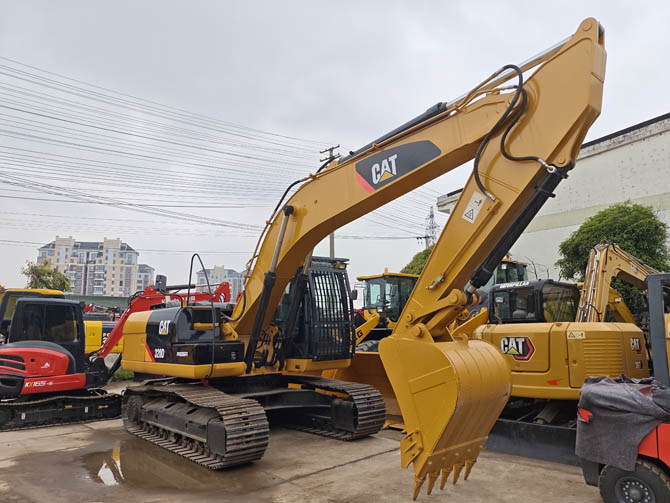
- Make:
- Model Name:
- Place of Origin:
- Caterpillar
- 320D
- Japan
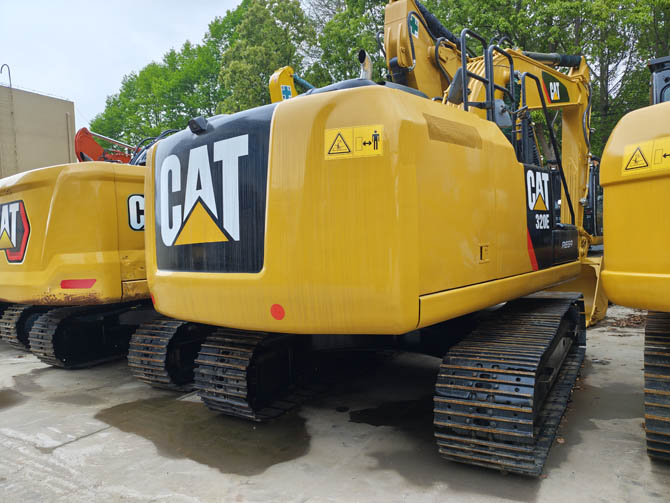
- Make:
- Model Name:
- Place of Origin:
- Caterpillar
- 320E
- Japan
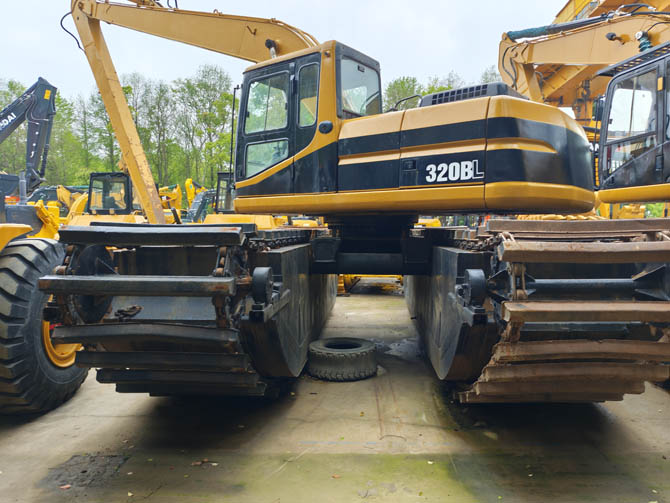
- Make:
- Model Name:
- Place of Origin:
- Caterpillar
- 320BL
- Japan
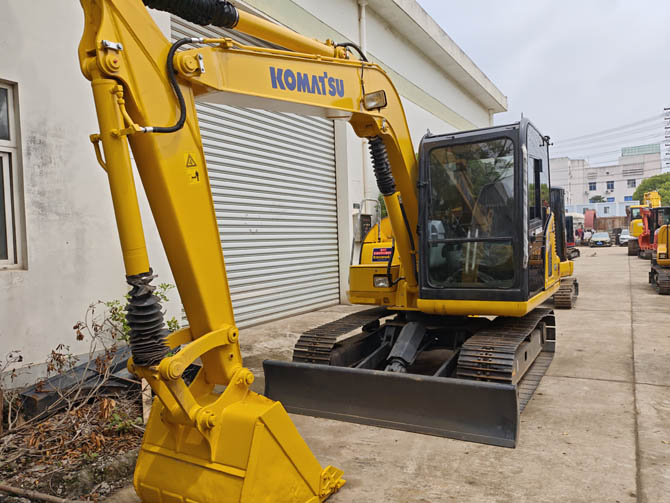
- Make:
- Model Name:
- Place of Origin:
- Komatsu
- PC70-8
- Japan
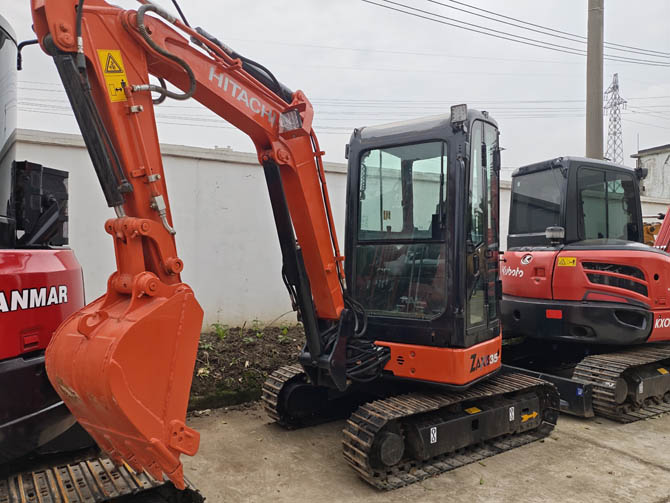
- Make:
- Model Name:
- Place of Origin:
- Hitachi
- Zaxis35
- Japan
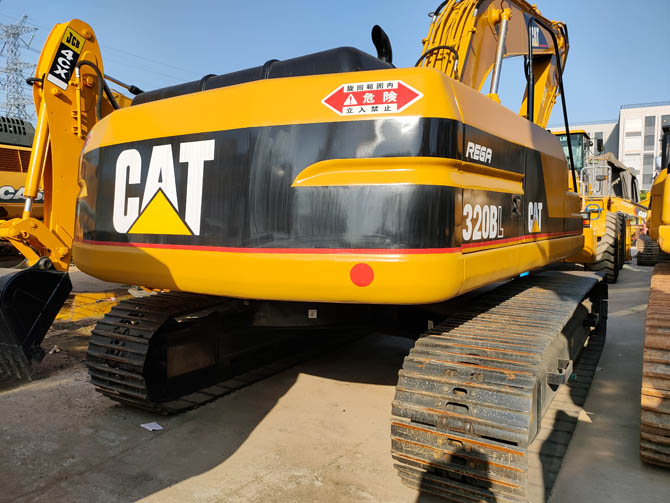
- Make:
- Model Name:
- Place of Origin:
- Caterpillar
- 320BL
- Japan

- Make:
- Model Name:
- Place of Origin:
- Komatsu
- PC360-7
- Japan

- Make:
- Model Name:
- Place of Origin:
- Caterpillar
- 306
- Japan